Global Navigation
Project Overview
When I joined the design team, navigation was a major usability issue: users had to move between five separate platforms, each with its own model, and a new “entry” experience was being planned on top of that.
I proposed unifying navigation across platforms, despite initial concerns about technical and organizational constraints. We ultimately launched a shared top navigation across all platforms, which later became the foundation for full platform consolidation.
Audience
Navigation is a core, always-on experience used by all roles: teachers, students, school administrators, and internal administrators.
Because it spanned every product and role:
The change impacted the entire codebase, much of which was unfamiliar to engineers who had previously worked in isolated product areas
It required coordination across multiple teams that had not historically collaborated on shared infrastructure
This made the project as much an engineering and organizational challenge as a design one.
Role & Scope
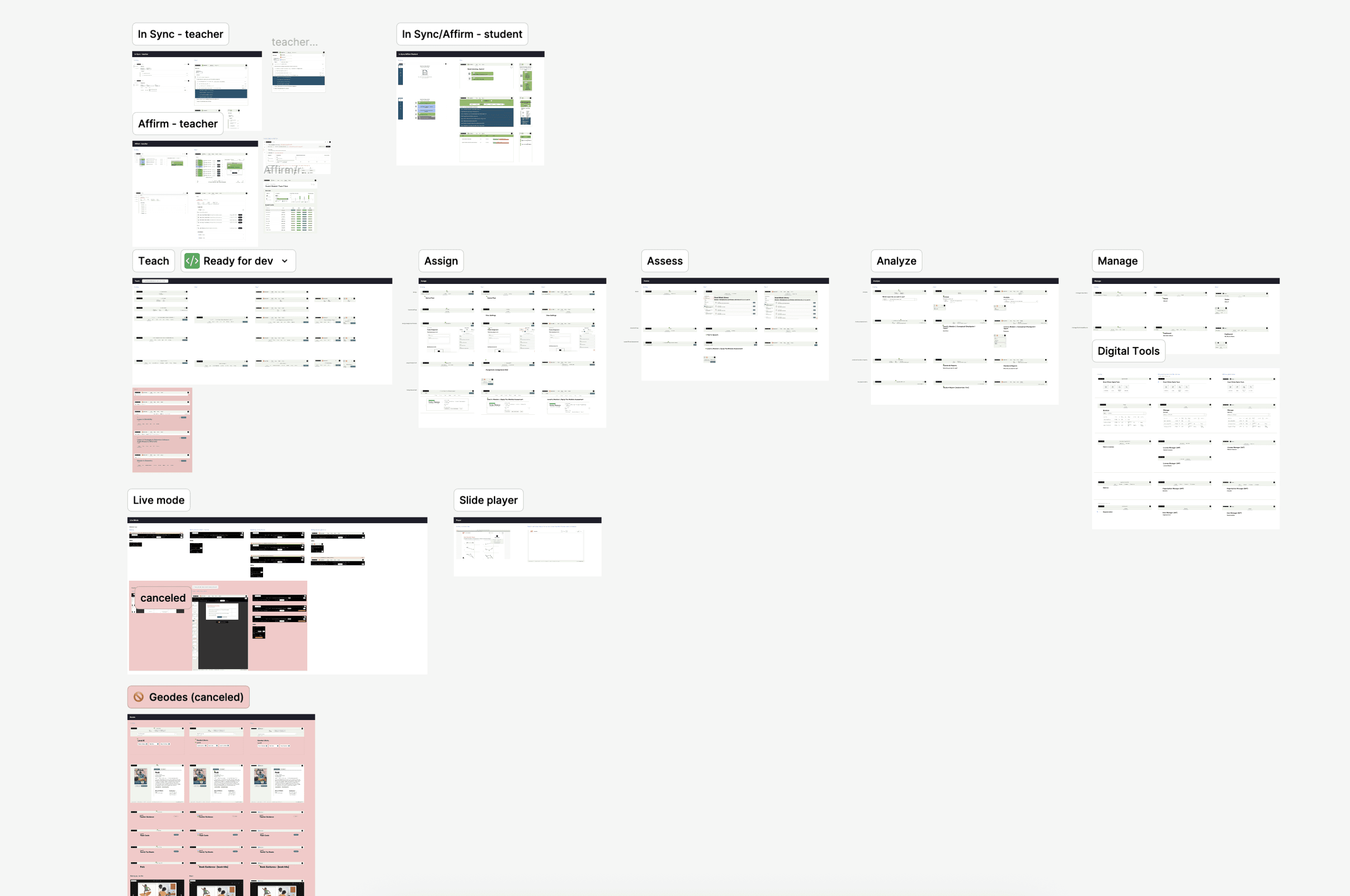
I led the initiative end to end, starting with a comprehensive audit of all existing navigation patterns across products.
My responsibilities included:
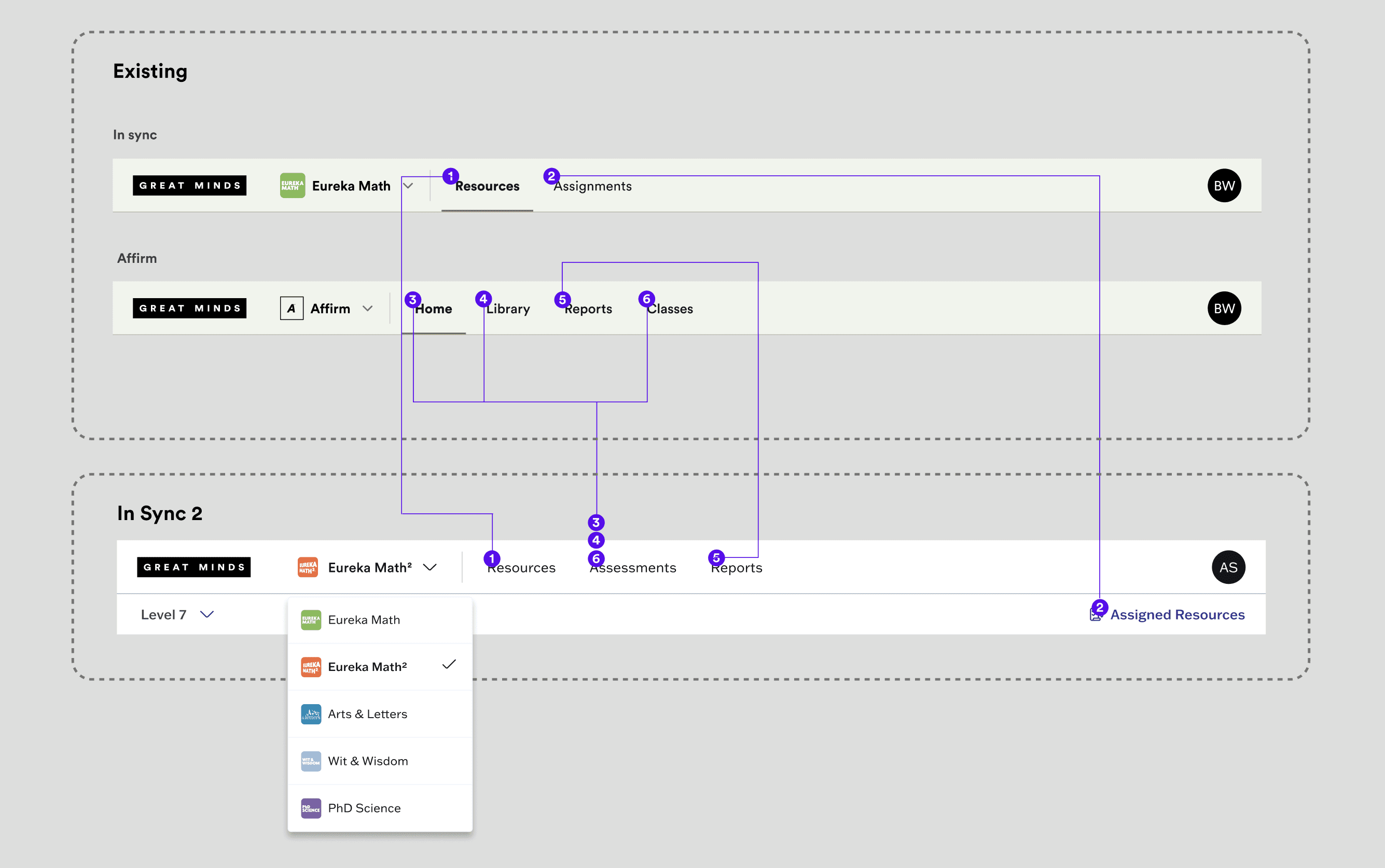
Mapping and synthesizing disparate navigation models into a single conceptual framework
Aligning design, product, and engineering stakeholders around the idea that these experiences were solving the same user problem and should be unified
Partnering closely with engineers to determine how to break down and sequence the work, given that the same UX change required different technical implementations across codebases
Coordinating design decisions across teams that were making concurrent changes in overlapping areas of the code
This work required both systems thinking and sustained cross-functional leadership.
Key Improvements
Through audits and user testing, we identified and addressed a combination of usability, accessibility, and structural issues:
Fixed content hierarchy issues that created accessibility barriers
Added clear visibility into the active curriculum so users always knew where they were
Improved discoverability by reorganizing labels and groupings around curricula rather than internal platform structures, aligning with user mental models
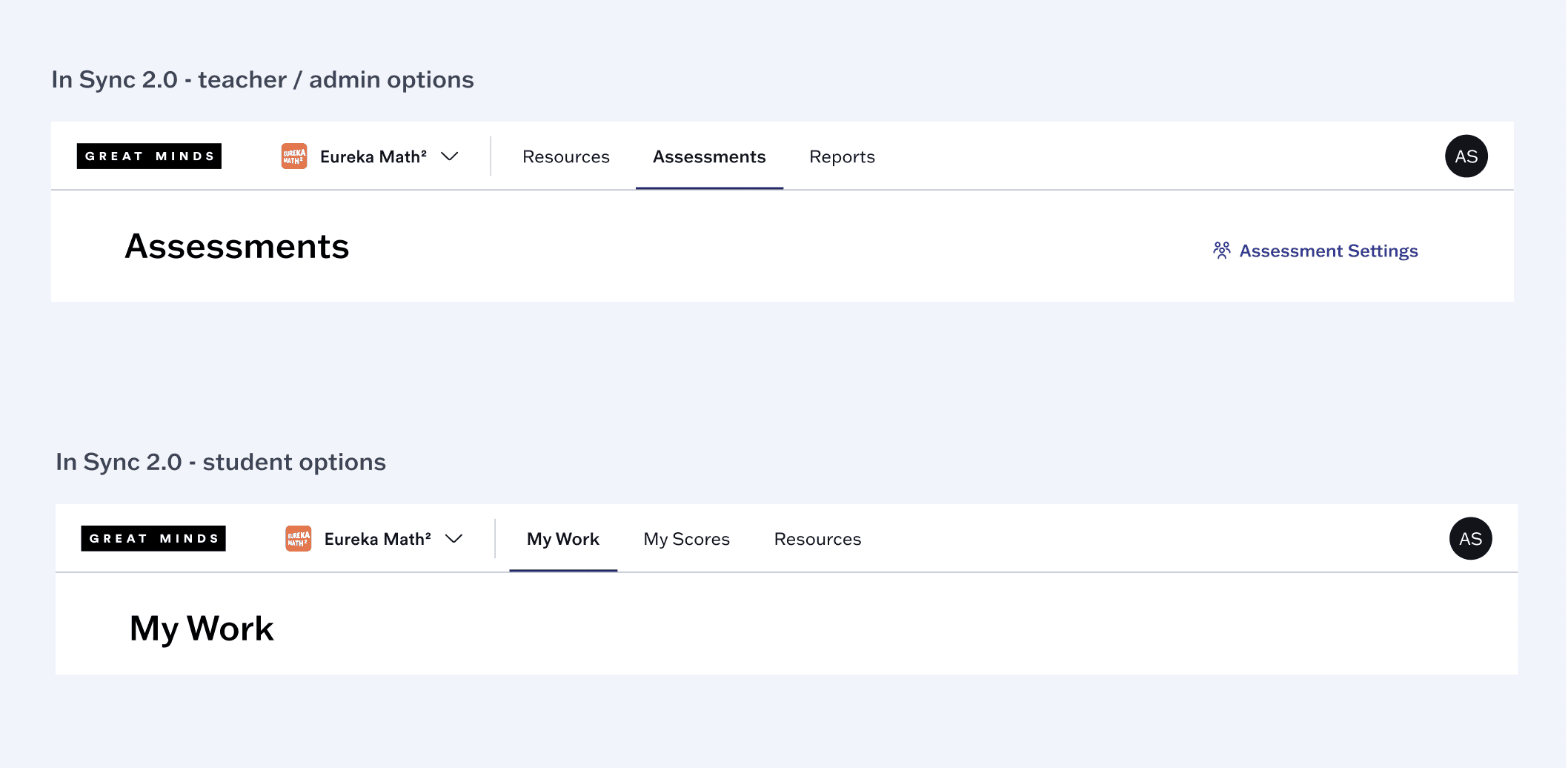
Reduced cognitive friction across roles by aligning experiences for teachers, students, and admins—important because users often support or train other roles without having access to their exact experience
These changes also surfaced deeper systemic issues, including significant inefficiencies in backend systems such as licensing logic, which were subsequently addressed.
Outcomes
Success was measured by a reduction in user complaints related to finding content and navigating the platform.
Beyond immediate usability gains, this work:
Became a catalyst for a broader platform consolidation effort
Established a single, consistent navigation experience across products
Eliminated thousands of lines of legacy code
Removed the need for a large, custom API previously built solely to support navigation
Ultimately, the project reduced both user-facing complexity and long-term technical maintenance costs, while laying critical groundwork for future platform unification.